What Makes CWS Different from Other Online Schools in Ontario?
Choosing an online school may seem straightforward. Families compare courses, tuition, schedules and graduation options, and then decide which school seems right for their child. After many years of working with students and parents, however, I have learned that education is much more personal than that.
Every student comes to us with a different story. Some already know exactly what they want to study at university but need help choosing the right courses. Others have good academic ability but are still uncertain about their future. International students may be trying to understand an unfamiliar Canadian education system. Some students have talents in areas such as mathematics or the arts that have not yet been fully recognized.
This is one of the ideas behind CWS Canadian World Schools. We wanted to use technology to make education more flexible, but without losing the human relationship between the school, the student and the family.
Sometimes a Student Needs More Than a Course
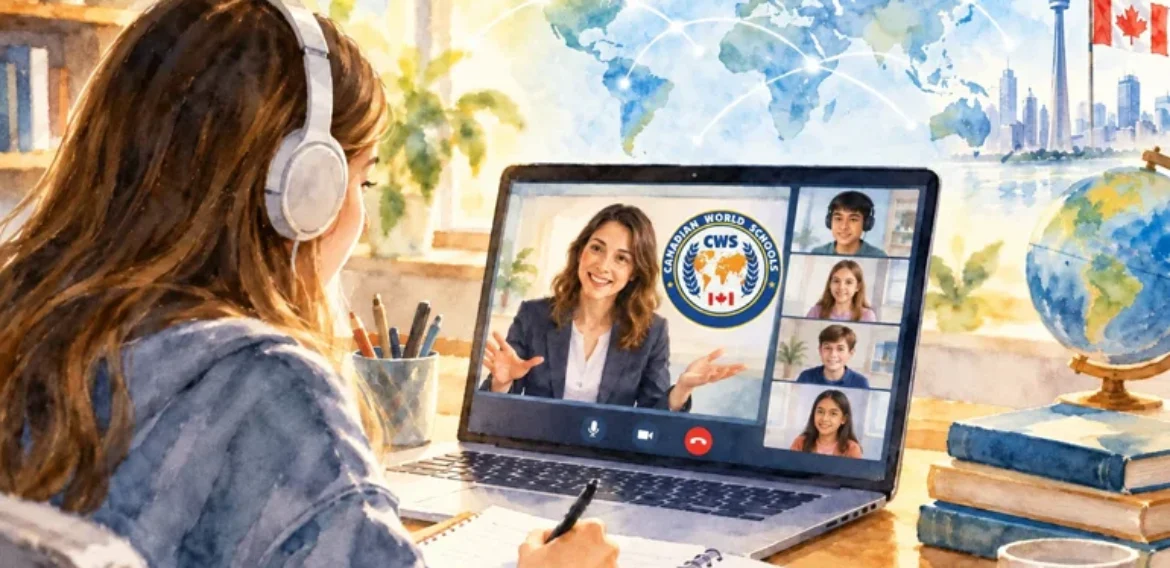
 Online education has changed considerably. Students can study from almost anywhere, access their courses at different times and communicate with their school without being physically present in a classroom.
But putting a course online does not automatically create a good educational experience.
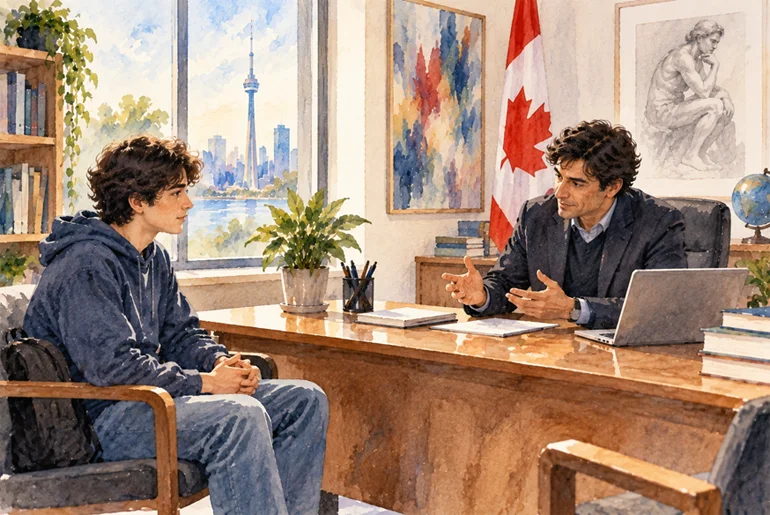
At CWS, we try to know the student behind the computer screen. Students and parents have access to 24/7 WhatsApp messaging, making it easier to communicate with the school when they have questions or concerns. When needed, we also arrange individual meetings with students and parents to discuss academic progress, course selection and future educational plans.
Sometimes a student does not need a major intervention. A relatively small change in course selection or educational planning can make a significant difference. Recognizing a weakness early, choosing the right Grade 11 courses, or understanding university prerequisites before reaching Grade 12 can prevent problems later.
Our goal is not simply to register students in courses. We want them to understand where those courses may take them.
My Own Journey Shaped the Way I Look at Education
 My approach to education is closely connected to my own experience.
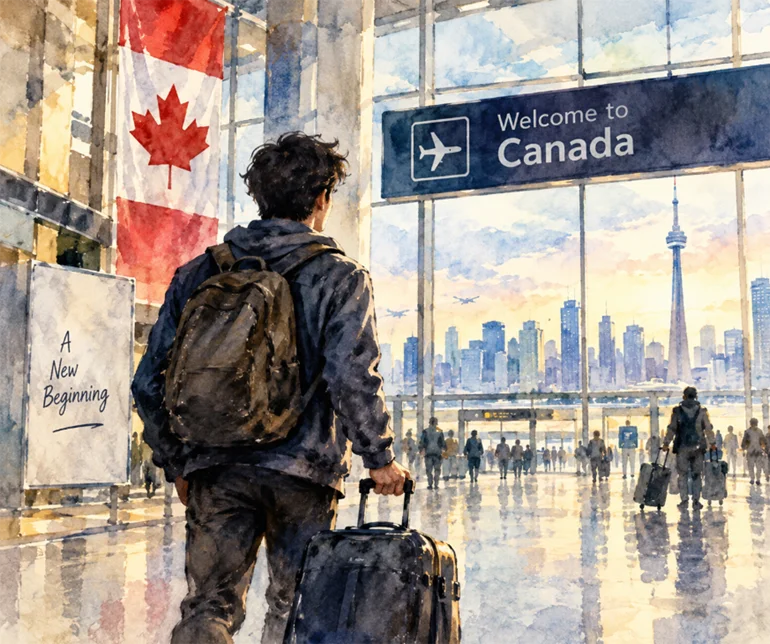
I came to Canada as a young person from another country. I had dreams and ambitions, but I also had to learn how to navigate a new country, a different culture and a new education system.
From my early days in Canada, I understood that becoming successful would require more than simply hoping for a better future. It required education, planning, persistence and the willingness to keep moving forward.
Over the years, I earned a Bachelor of Fine Arts in Painting, a Bachelor of Arts with a major in Sculpture, and a Bachelor of Education from York University. My professional experience also includes 27 years of working as an art instructor and in the field of art therapy, which has greatly influenced the way I understand and support students. Together, these experiences have shaped the way I look at education and at each student as an individual. I do not believe that a student’s future can be understood only by looking at the marks on a report card. Marks matter, but so do interests, abilities, learning habits, circumstances and goals.
I have met many students who were capable of achieving much more than they believed. Sometimes what they were missing was not ability. They were missing direction.
I have always believed that a dream can become achievable when it is supported by the right education, guidance and planning.
Canadian Education Without Borders
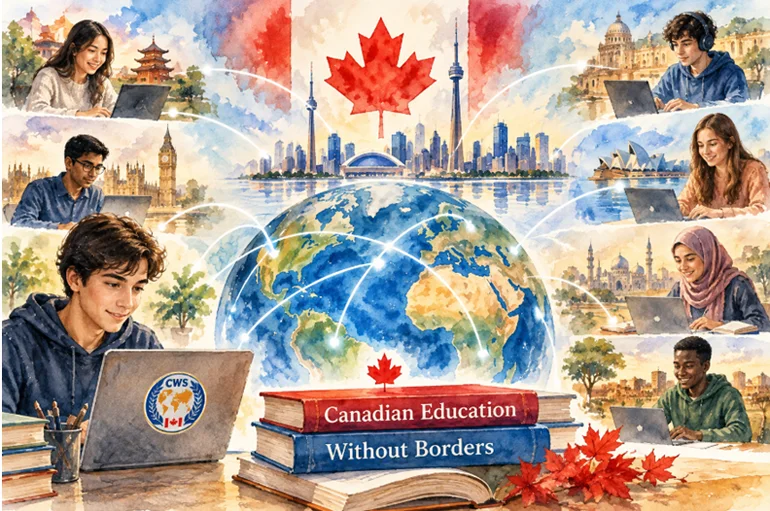 This belief was also one of the reasons I wanted to develop an online school.
When we began planning for online education, my goal was not simply to put Canadian courses on the internet. I wanted to find a way to make Canadian education available without borders.
Having come to Canada from another country myself, I understood what it meant to leave behind a familiar environment and enter a completely different education system. I began thinking about students around the world who wanted access to Canadian education but might not yet be able to leave their families, relocate thousands of kilometres away, or take on the significant financial and emotional challenges of moving to another country at a young age.
Technology offered another possibility.
A student could be sitting at home in Richmond Hill, elsewhere in Ontario, another Canadian province, or thousands of kilometres away in another country. Their locations might be completely different, but education could still connect them.
That became an important part of the philosophy behind CWS:
Canadian education without borders.
For me, online education was never only about convenience. It was about creating access and giving students more choices about where and how they could begin building their futures.
Individual Educational and Career Planning
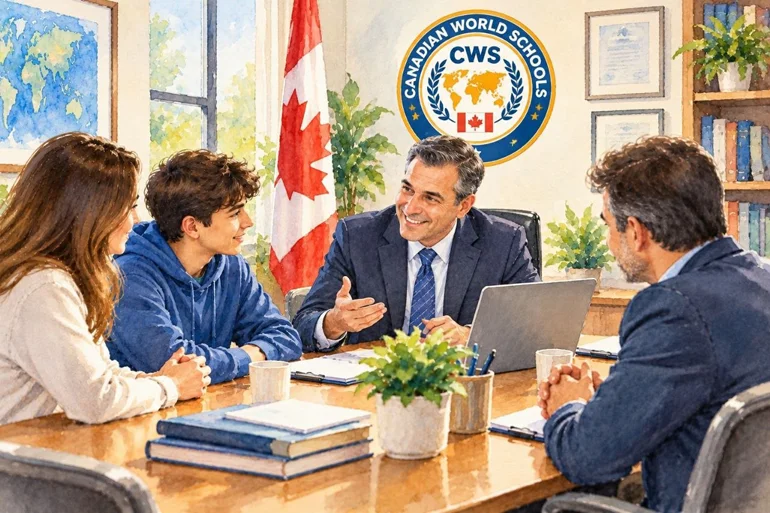 Another part of our approach is helping students think beyond the course they are taking today.
When appropriate, we meet individually with students and families to look at where the student is academically, what they are interested in, and where they would eventually like to go.
For secondary school students, this may involve reviewing course choices, graduation requirements, university prerequisites or possible career pathways. CWS students can also receive career-goal planning without an additional planning fee.
These conversations can become particularly valuable before Grades 11 and 12, when course selection begins to affect postsecondary options.
We also welcome parent involvement when appropriate. Parents often understand aspects of their child’s learning habits, interests and difficulties that cannot be seen by looking at grades alone.
This guidance is educational planning rather than a formal psychoeducational assessment. When a student requires a formal psychological or psychoeducational assessment, families should seek services from an appropriately qualified professional.
A Special Understanding of Fine Arts Students
 Fine Arts students can face a different set of questions when planning for university or college.
Because of my own background in visual arts, including painting, sculpture and art history, I have a particular interest in helping students who are considering Fine Arts, Visual Arts, Design and related postsecondary programs.
For some of these programs, academic marks are only part of the application. A portfolio can also be very important.
When appropriate, I can work with students on portfolio evaluation and guidance, artistic development, and thinking about how their work may be presented when applying to Fine Arts and related programs.
This is something I particularly enjoy because I understand the experience from both sides, as an artist and as an educator.
Understanding International and ESL Students
International students are also an important part of the history of CWS.
Because I came to Canada from another country at a young age, I understand some of the uncertainty students and families experience when entering a different educational system.
They often have very practical questions. Which Canadian courses are required? How will previous education be considered? What is an OSSD? Which Grade 12 courses are required for a particular university program? When should university planning begin?
For us, international education is not simply about giving someone in another country access to an online course.
Students and families need someone who can explain the system and help them understand the pathway they are entering. Our years of working with ESL and international students have shaped the way we provide that guidance.
An Educational History We Are Proud Of
 The educational philosophy behind CWS also shares a history with our sister school, Richmond Hill World School (RWS).
Over the years, RWS students have achieved outstanding results in mathematics competitions at the Canadian and international levels, including participation and high placements in the Canadian Mathematical Olympiad.
One of the achievements we are especially proud of came when an RWS student represented Team Canada at the International Mathematical Olympiad and earned a Silver Medal.
These achievements are meaningful to us, but not simply because of medals or rankings.
Behind every award is a student. Someone had to recognize that student’s ability, encourage it, challenge it and help create opportunities for it to develop.
That is the part of these achievements that connects most strongly with our educational philosophy.
Families can read more about our competition history and student achievements on our Awards & Achievements page.
Online Education with a Human Connection
CWS began planning for online education long before online learning became as common as it is today. Technology has changed enormously since those early years, and it will continue to change.
Our basic philosophy, however, has remained much the same.
Online education should provide flexibility, but students should still know that there are real people behind their school.
There should be someone to contact when something is not working. There should be someone who notices when a student’s educational plan does not make sense. Parents should have a way to ask questions. And when a student says, “This is what I want to become,” there should be someone willing to sit down with that student and help identify the steps that may be needed to get there.
That is what we continue trying to build at CWS.
Every student will have a different journey, and no school can promise a particular university admission, career or academic result. What we can provide is education, communication, guidance and thoughtful planning that can help students better understand the path ahead of them.
After many years in education, I still believe something quite simple:
Dreams matter, but dreams become much more achievable when students have the right guidance and a plan for reaching them.
Mehrdad Sabouhi
Principal
CWS Canadian World Schools